categories

Microscope Lab Equipment Manufacturer, Suppliers and Exporter in India

Didactic Lab is a leading Microscope Manufacturer,and suppliers in India, Algeria (Algiers), Angola (Luanda), Argentina (Buenos Aires), Armenia (Yerevan), Australia(Canberra), Austria (Vienna), Bahrain (Manama), Bangladesh (Dhaka), Bhutan (Thimphu), Bolivia (Sucre), Botswana (Gaborone), Brazil (Brasília), Brunei (Bandar Seri Begawan), Montenegro (Podgorica), Morocco (Rabat), Mozambique (Maputo), Myanmar (Naypyidaw), Namibia (Windhoek), Nepal (Kathmandu), New Zealand (Wellington), Nigeria (Abuja), Oman (Muscat), Palestine (Ramallah), Panama (Panama City), Papua New Guinea (Port Moresby), Paraguay (Asunción), Peru (Lima), Philippines (Manila)¸ Portugal (Lisbon), Qatar (Doha), Rwanda (Kigali), Saudi Arabia (Riyadh), Senegal (Dakar), Serbia (Belgrade), Sierra Leone (Freetown), Slovakia (Bratislava), South Africa (Cape Town) (Pretoria) (Bloemfontein), South Sudan (Juba), Spain (Madrid), Sri Lanka (Sri Jayawardenepura Kotte) (Colombo), Sudan (Khartoum), Syria (Damascus), Tanzania (Dodoma), Thailand (Bangkok), Togo (Lomé), Tonga (Nuku'alofa), Trinidad and Tobago (Port of Spain), Tunisia (Tunis), Turkey (Ankara), Turkmenistan (Ashgabat), Uganda (Kampala), United Arab Emirates (Abu Dhabi), United Kingdom (London), United States (Washington, D.C.)

Microscope laboratory products enable magnification of specimens for educational purposes, laboratory research, teaching, study and specialist uses. The existing section is classified according to Laboratory Microscope, Student Microscope, Teaching and Multi Head Microscope, Surgical Microscope, Stereo Microscope, Digital Microscope and Inverted Microscope categories. Listed products consist of monocular, binocular, trinocular, compound, stereo, dual view, phase contrast, inverted and specialist microscope types. The models vary by type of eyepiece, objectives, magnification, illumination, specimen stage, number of viewing heads, etc., therefore choosing should be done according to the product specifications.

Microscope Types and Configurations

The live Microscope category contains seven specialist product groups.

  • Laboratory Microscopes: verified listings include LED microscope series, binocular biological microscopes, trinocular biological microscopes, cordless LED models, compound microscopes and histopathology microscope configurations. Product pages show model-specific differences in eyepieces, objectives, stages, viewing heads and optical systems.
  • Student Microscopes: listings include a simple non-powered scope microscope, monocular microscopes with tungsten or LED illumination, rechargeable and solar LED models, binocular LED microscopes and a monocular model with a vertical camera port. The category includes classroom-oriented configurations with different objective, stage, eyepiece and illumination arrangements.
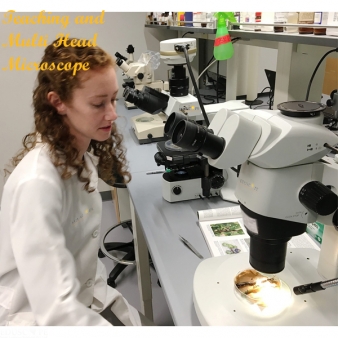
  • Teaching and Multi Head Microscopes: current products include dual-view teaching microscopes, two-head pathology microscopes, three-head research microscopes, dual-discussion digital stereo microscopes and dual-view teaching histopathology microscopes. These listings provide configurations intended for shared observation, teaching, discussion or training.
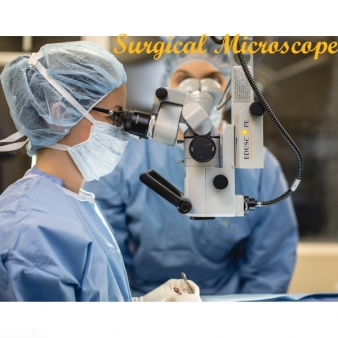
  • Surgical Microscopes: verified listings include motorised ophthalmology microscopes, colposcopes, zoom surgical microscopes, dental surgical microscopes and ENT surgical microscopes. Regulatory or clinical compliance should be confirmed separately for the exact model and intended market before procurement.
  • Stereo Microscopes: listings include monocular stereo, fixed-magnification, LED, dissecting, cordless zoom, pole-stand and binocular stereo microscopes. Published models differ in objective arrangement, magnification, field of view, illumination and stand configuration.
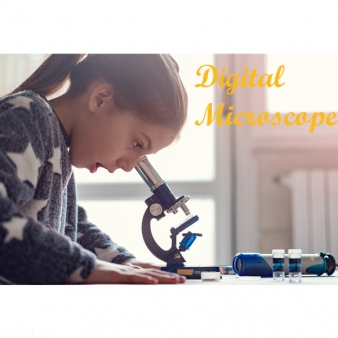
  • Digital Microscopes: a dedicated Digital Microscope subcategory is part of the current Microscope taxonomy. Exact product inventory and specifications should be taken from the live product component when selecting equipment.
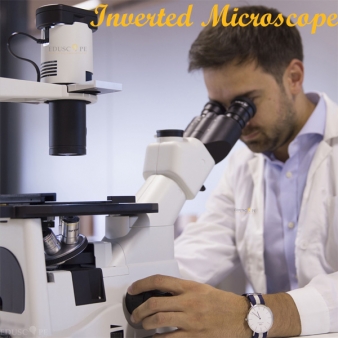
  • Inverted Microscopes: current listings include trinocular inverted microscopes, binocular inverted phase microscopes, inverted phase-contrast models and inverted metallurgical microscopes. Individual listings show differences in eyepieces, nosepieces, optical configurations and viewing arrangements.

What Should Buyers Compare Before Ordering a Microscope?

Buyers should first define the specimen, observation method and user environment, then compare the optical and mechanical specification of the exact microscope model.

Selection criterion

What the buyer should verify

Intended observation

Confirm whether the microscope is required for classroom microscopy, biological specimens, shared teaching, stereo observation, cultures, pathology, metallurgical work or another documented application.

Product or model code

Use the exact listed product code when requesting specifications or quotations so similar microscope configurations are not confused.

Viewing configuration

Confirm whether monocular, binocular, trinocular, dual-view or multi-head viewing is required.

Eyepieces and objectives

Compare the supplied eyepieces, objective types and objective magnifications for the selected model.

Total magnification

Verify the model stated magnification configuration rather than assuming a standard range across the category.

Optical system

Where relevant, confirm whether the proposed model uses the required biological, brightfield, phase-contrast, stereo, infinity or other documented optical arrangement.

Illumination

Check whether the microscope uses LED, tungsten, rechargeable, cordless, solar or another stated illumination configuration.

Stage and focusing

Compare stage dimensions or movement, specimen controls, coarse/fine focusing and mechanical-stage arrangements where these affect the intended work.

Imaging or documentation

If photographs, video or digital display are required, verify the applicable camera port, digital system or connection on the exact model.

Power requirements

Confirm mains, rechargeable, cordless or non-powered operation according to the laboratory infrastructure and selected microscope.

Accessories and consumables

Check whether required slides, reticles, eyeguards, camera components, spare parts or other accessories are included or ordered separately.

Documentation and support

Request current technical specifications, manuals, catalogue information and any required installation or operating documentation before purchase.

The live listings demonstrate substantial model variation. Laboratory microscopes include binocular and trinocular configurations with different eyepiece, stage and objective arrangements; student models range from a simple microscope requiring no electricity to LED and camera-port configurations; and stereo microscopes use different fixed, selectable or zoom magnification arrangements.

Microscope Applications

Laboratory and student microscopes are listed for magnified observation in scientific study and education, including examination of cells, tissues and microorganisms. Student microscope pages specifically describe applications in introductory cell biology, microbiology and anatomy.

Teaching and multi-head microscopes support situations where an instructor and other users need to observe or discuss the same specimen. Stereo microscopes provide three-dimensional observation of larger or opaque objects, while inverted microscope listings address observation of samples such as cells or cultures held in dishes or flasks.

The supplied procurement brief identifies schools, colleges, universities, research laboratories, industrial laboratories, government institutions, NGOs, distributors, importers, project consultants and educational procurement agencies among the target buyer groups. It identifies East Africa and other African markets, Europe, the Middle East and Asia among the principal regions.

Institutional, Export and Microscope Support

Institutional microscope enquiries should identify the required product or model code, quantity and technical specification. Where procurement requirements define magnification, optical system, viewing head, illumination, stage, camera capability or other features, those requirements should be compared with the exact proposed model before ordering.

For microscopes specifically, the site FAQ states that installation instructions, manuals and training are available for advanced equipment. It also states that training manuals, video demonstrations and remote support are provided for specialised microscopes, and that consumables and spare parts are supplied alongside laboratory equipment.

The FAQ further states that microscopes can have extended-warranty programmes and that microscopes are transported in dedicated shock-protected cases. Exact warranty duration, coverage and commercial terms should be confirmed for the selected model and quotation.

For bulk procurement, the site states that it supplies educational institutions, government departments and private laboratories and provides special quotations or solutions for large-scale projects. The Tenders/OEM page separately presents Ministry of Education and vocational-training products and materials; this supports neutral tender-based procurement language without establishing Ministry approval, government certification or contract-award status.

Request Microscope Specifications or a Quotation

Submit the required microscope type or product code, quantities and technical requirements to request current specifications, catalogue information or a quotation.

Contact Us ·Tenders/OEM

There are no products in the category

Office Address

[email protected]

Follow Us