Mechanical Engineering Lab Equipment Manufacturer, Suppliers and Exporter in India
Didactic Lab is a leading Mechanical Engineering Manufacturer,and suppliers in India, Algeria (Algiers), Angola (Luanda), Argentina (Buenos Aires), Armenia (Yerevan), Australia(Canberra), Austria (Vienna), Bahrain (Manama), Bangladesh (Dhaka), Bhutan (Thimphu), Bolivia (Sucre), Botswana (Gaborone), Brazil (Brasília), Brunei (Bandar Seri Begawan), Montenegro (Podgorica), Morocco (Rabat), Mozambique (Maputo), Myanmar (Naypyidaw), Namibia (Windhoek), Nepal (Kathmandu), New Zealand (Wellington), Nigeria (Abuja), Oman (Muscat), Palestine (Ramallah), Panama (Panama City), Papua New Guinea (Port Moresby), Paraguay (Asunción), Peru (Lima), Philippines (Manila)¸ Portugal (Lisbon), Qatar (Doha), Rwanda (Kigali), Saudi Arabia (Riyadh), Senegal (Dakar), Serbia (Belgrade), Sierra Leone (Freetown), Slovakia (Bratislava), South Africa (Cape Town) (Pretoria) (Bloemfontein), South Sudan (Juba), Spain (Madrid), Sri Lanka (Sri Jayawardenepura Kotte) (Colombo), Sudan (Khartoum), Syria (Damascus), Tanzania (Dodoma), Thailand (Bangkok), Togo (Lomé), Tonga (Nuku'alofa), Trinidad and Tobago (Port of Spain), Tunisia (Tunis), Turkey (Ankara), Turkmenistan (Ashgabat), Uganda (Kampala), United Arab Emirates (Abu Dhabi), United Kingdom (London), United States (Washington, D.C.)
Mechanical engineering lab equipment supports practical teaching, measurement, testing and technical training across materials, instrumentation, fluid mechanics, applied mechanics, automotive systems, thermal engineering, heat transfer, refrigeration, machine dynamics, fuel testing and workshop practice. The current category is organised into 11 specialist laboratory areas for universities, colleges, technical institutes, TVET programmes, research laboratories and other institutional buyers. The confirmed business role is manufacturer and exporter, with product names, descriptions, technical specifications, applications, model information and catalogue details available for procurement evaluation. The live parent page confirms the 11-part category structure.
Mechanical Engineering Equipment by Laboratory Area
The current Mechanical Engineering category contains the following specialist sections.
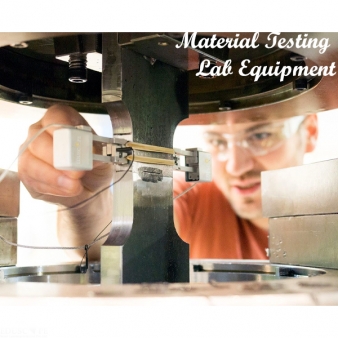
- Material Testing Lab Equipment: a dedicated section for equipment used in mechanical-engineering material testing and strength-of-materials laboratory work. Exact machines, capacities and test configurations should be selected from the current model documentation.
- Instrumentation and Measurement Lab Equipment: the site describes equipment for measuring variables such as pressure, temperature and flow, with examples including measurement instruments, sensors and data-acquisition systems used in experimentation and technical work.
- Fluid Mechanics Lab Equipment: the category covers practical study of fluid behaviour, flow and hydraulic systems. The site identifies equipment types including orifice meters, Venturi meters, Bernoulli apparatus, Reynolds-number equipment, flow-measurement tools and hydraulic benches.
- Applied Mechanics Lab Equipment: a separate Applied Mechanics section is included in the current taxonomy. Buyers should specify the intended experiment and required apparatus rather than infer a particular model or specification from the category name alone.
- Automobile Engineering Lab Equipment: the category includes a dedicated Automobile Engineering laboratory section for mechanical and technical training requirements. Exact equipment and configurations should be confirmed against current model information.
- Thermal Engineering Lab Equipment: the site describes this area around heat transfer and energy conversion and identifies equipment such as refrigeration and air-conditioning trainers, boiler models, heat exchangers, steam turbines and thermal-conductivity apparatus.
- Heat and Mass Transfer Lab Equipment: this dedicated section forms part of the Mechanical Engineering taxonomy for practical work involving heat- and mass-transfer principles. Exact apparatus should be matched to the required experiment or technical specification.
- Refrigeration and Air Conditioning Lab Equipment: the site identifies refrigeration-cycle demonstrators, air-conditioning trainers, heat-pump test rigs, cooling-tower apparatus, psychrometers and vapour-compression-cycle models for HVAC-related practical learning.
- Dynamics of Machine Lab Equipment: this section covers motion and forces in mechanical systems. The site identifies gyroscope apparatus, governor apparatus, vibration trainers, cam-analysis equipment, rotating-mass balancing and flywheel apparatus among the equipment types associated with the category.
- Fuel Testing Lab Equipment: the current category information identifies equipment types such as octane testers, cetane testers, flash-point testers, viscometers, densitometers, calorimeters and distillation units for fuel analysis.
- Workshop Tools, Machines and Accessories: the site associates this section with practical workshop and maintenance training and identifies bench drills, lathes, milling machines, surface grinders, band saws, tool kits, clamps and measuring instruments.
What Should Buyers Compare Before Ordering Mechanical Engineering Lab Equipment?
Buyers should first define the required experiment, test or training objective and then compare the specification of the exact proposed equipment.
|
Selection criterion |
What the buyer should verify |
|
Intended experiment or training task |
Define the mechanical principle, measurement, test or workshop operation the equipment must support. |
|
Product or model code |
Use the exact model or catalogue reference in technical enquiries and quotations where one is provided. |
|
Capacity and operating range |
Confirm required load, speed, pressure, temperature, flow, force or other working limits for the experiment. |
|
Measurement specification |
Where measurements are required, verify range, resolution, accuracy and sensor or indicator configuration for the exact model. |
|
Specimen or component compatibility |
Check the applicable specimen, test piece, component, mounting or connection requirements. |
|
Electrical and utility requirements |
Confirm voltage, frequency, water, compressed air, fuel, refrigeration or other required services before installation. |
|
Instrumentation and controls |
Verify displays, sensors, controllers, data-acquisition functions and recording requirements where applicable. |
|
Installation requirements |
Check dimensions, bench or floor space, foundations, ventilation and access requirements for the selected equipment. |
|
Safety provisions |
Confirm appropriate guarding, emergency controls and operating procedures for rotating machinery, pressure systems, heating equipment and workshop machines. |
|
Calibration requirements |
If the procurement specification requires traceable measurement, state the required calibration documentation in the enquiry. |
|
Accessories and consumables |
Confirm which tools, specimens, sensors, leads, fluids or other components are supplied with the selected configuration. |
|
Documentation and training |
State any requirement for manuals, installation instructions or user training in the procurement specification. |
Because Mechanical Engineering equipment can differ substantially by experimental purpose and configuration, procurement teams should avoid treating equipment named within the same laboratory area as interchangeable.
Mechanical Engineering Laboratory Applications
Mechanical Engineering equipment on the site is positioned for practical study and technical training in thermodynamics, fluid mechanics, strength of materials and workshop processes. The FAQ specifically identifies thermodynamics kits, fluid-mechanics units, strength-of-materials testers and workshop equipment for university and technical courses.
The supplied brief identifies schools, colleges, universities, research laboratories, industrial laboratories, government institutions, NGOs, distributors, importers, project consultants and educational procurement agencies among relevant buyer groups. It also identifies East Africa and other African markets, Europe, the Middle East and Asia among the primary regions. The site FAQ separately states that Mechanical Engineering equipment is used in vocational, technical and skill-development training centres.
Institutional, TVET and Bulk Procurement
Institutional enquiries should provide the required laboratory area, equipment or model references, quantities and technical requirements. For powered rigs, measuring systems and workshop machines, procurement specifications should identify relevant operating ranges, utilities, instrumentation and installation requirements so the proposed equipment can be evaluated against the requirement.
The site states that it accepts bulk orders from educational institutions, government departments and private laboratories and offers quotations for large-scale requirements. It also specifically states that institutions and agencies can request quotations for Mechanical Engineering equipment.
For advanced Mechanical Engineering equipment, the FAQ states that installation instructions, manuals and training are available. It also states that calibration, maintenance and technical servicing are available for mechanical laboratory equipment and that after-sales support includes warranty assistance, spare parts, user manuals and technical guidance. The exact scope and commercial terms should be confirmed for the selected equipment and destination.
The site additionally states that it assists schools and institutes with planning and setting up Engineering laboratories.
Institutional and Tender-Based Supply
The site Tenders/OEM section is headed “Ministry of Education – Tenders” and describes Ministry of Education and vocational-training products and materials. Mechanical Engineering and its laboratory sections are included in that site tender taxonomy. This supports neutral references to equipment for institutional and tender-based educational procurement; it does not by itself establish Ministry approval, government certification, preferred-vendor status or any specific tender award.
Related Laboratory Categories
For multi-department laboratory projects, buyers can also review:
- Physics Lab Equipment
- Biology Lab Equipment
- Laboratory Appliances
- Chemistry Lab Equipment
- Microscopes
- Maths Lab Equipment
These related-category destinations are explicitly supplied in the project brief.
Request Mechanical Engineering Lab Equipment Specifications or a Quotation
Submit the required laboratory area, equipment or model references, quantities and technical requirements to request current specifications, catalogue information or a quotation.